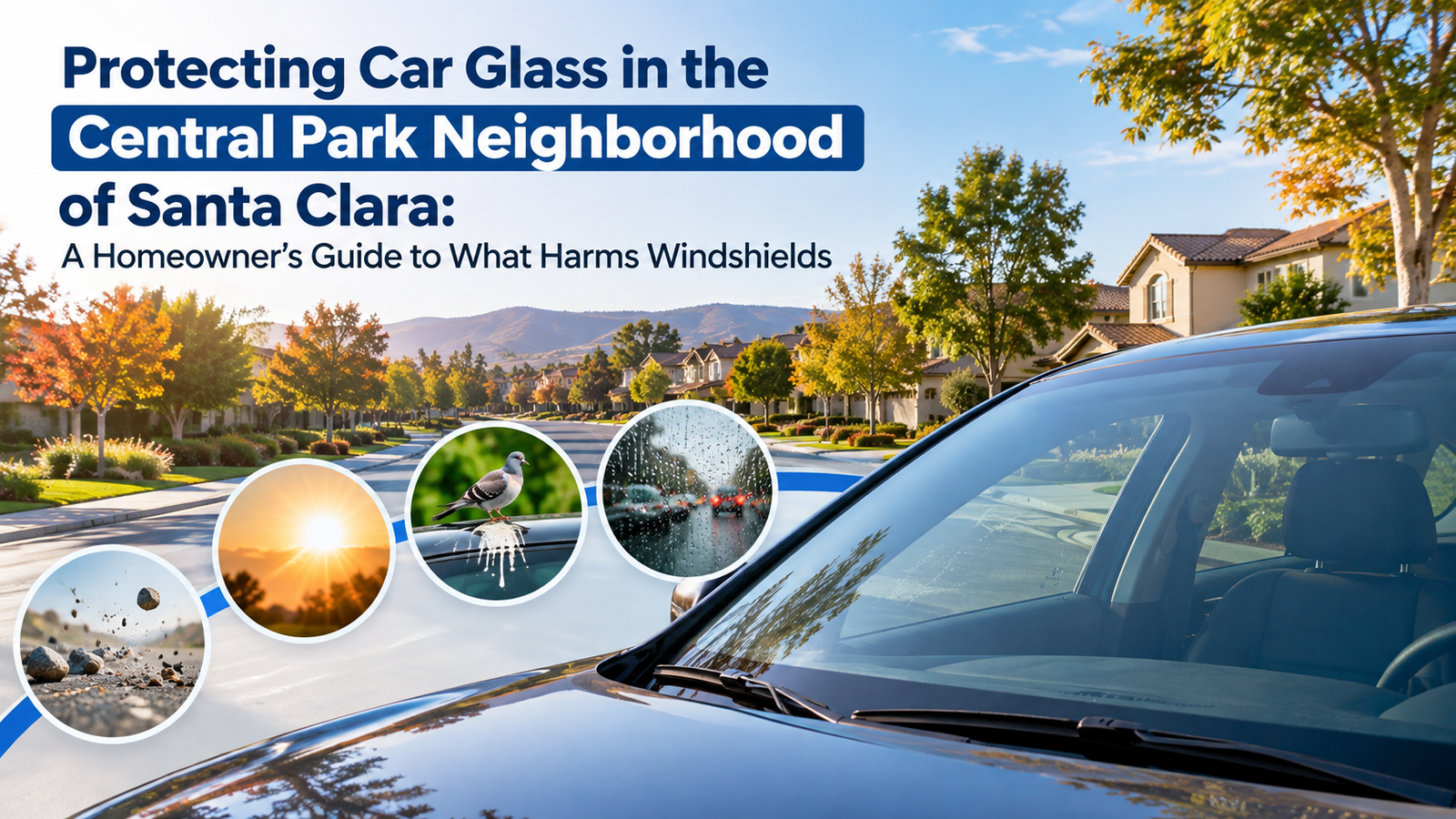
A quiet residential neighborhood can seem like the safest place a car will ever be parked. The streets are calmer than a freeway, the driveway is familiar, and the garage may even be nearby. Yet vehicle glass in a family neighborhood faces its own particular set of threats, many of which are easy to overlook because they feel ordinary. Lawn equipment, sprinklers, backyard ball games, tree sap, and the daily school-run routine all leave marks on windshields, side windows, and rear glass over time.
This guide looks at auto glass repair Central Park Neighborhood care through the lens of a residential area like the one surrounding Central Park in Santa Clara. It explains the household and neighborhood factors that damage glass, the difference between damage that is cosmetic and damage that matters for safety, how repair and replacement are generally understood, and the maintenance habits that keep glass in good condition for years. It is general information for households, not a prescription for any particular vehicle.
The Neighborhood Setting
The area around Central Park in Santa Clara is characterized by established residential streets, a large city park with open lawns and mature trees, a public library and community facilities, and easy access to major routes like Lawrence Expressway, Highway 101, and Highway 237. Families, commuters, and retirees share these streets, and many residents leave in the morning for jobs elsewhere in Silicon Valley.
Several features of this kind of neighborhood affect vehicle glass.
Driveways and street parking. Many households park in driveways or along the curb. Cars parked outdoors are exposed to sun, sprinklers, tree drop, and passing foot traffic.
Mature trees. Shade trees keep cars cooler but also deposit leaves, twigs, sap, pollen, and fruit. Branches can fall in windy weather.
Open park space. Large lawns attract ball games, frisbees, cycling, and events. Stray balls and equipment occasionally reach parked cars.
Landscaping and maintenance. Lawn mowers, string trimmers, and leaf blowers throw gravel and debris at high speed. Sprinklers spray water that leaves deposits on glass.
Family activity. Bicycles, scooters, skateboards, and play equipment around driveways create opportunities for accidental contact.
School and commuter traffic. Busy mornings involve a lot of short trips, quick stops, and parking maneuvers.
Residential Causes of Glass Damage
Most people think of rock chips from the freeway, and those certainly matter. But a good deal of damage happens at home.
Lawn and garden equipment. A mower or string trimmer can hurl small stones, twigs, and grit sideways with surprising force. Cars parked near a lawn or a gravel strip are at risk. Chips on the side of a windshield or on a side window near the driveway often come from this source.
Sprinkler water. Irrigation water in many parts of California contains dissolved minerals. When sprinklers wet a windshield repeatedly and the water evaporates in the sun, it leaves white mineral spots. Over time these deposits can etch into the glass, becoming harder to remove.
Tree sap and pollen. Sap is sticky and attracts dirt. Left on glass in warm weather, it hardens and can leave stubborn spots. Pollen contributes to a dull film that reduces clarity.
Bird droppings. Droppings are acidic and, if left in the sun, can mark glass and paint. They should be removed promptly with water and a soft cloth.
Falling debris. Branches, fruit, and seed pods can strike windshields, especially during windy weather.
Sports and play equipment. Baseballs, soccer balls, and hard toys can crack or chip glass if they strike at speed.
Garage and driveway incidents. A ladder, a shovel, or a stored item shifting in a truck bed can hit glass.
Ice scrapers and improper cleaning. In occasional cold snaps, scraping or using hot water on cold glass can cause scratches or thermal stress.
Mineral Spotting and Hard Water: A Quiet Problem
Hard water spots deserve special attention because they are common, often misunderstood, and different from impact damage. Sprinklers, car washes with untreated water, and rain mixed with dust can all leave deposits. They appear as white or cloudy marks, often in a pattern that follows the water spray.
At first the deposits sit on the surface and can be removed with a mild acid-based glass cleaner or a vinegar solution, along with gentle wiping. If they are left for months, the minerals can bond to the glass and, in more serious cases, etch into the surface, leaving permanent marks that scatter light and cause glare at night.
The best prevention is to avoid parking within the spray zone of sprinklers, to dry the glass after washing, and to clean deposits early. Etched glass cannot be restored by ordinary cleaning, and heavy etching can make a windshield difficult to see through in low sun.
Sun, Heat, and the Santa Clara Valley Climate
The Santa Clara Valley has a Mediterranean climate with long, dry summers and mild, damp winters. Summer afternoons can be hot, and parked cars become ovens. Winter mornings can be cool, and the contrast between cold air and sun-warmed glass creates stress.
Heat and thermal stress. A windshield exposed to direct sun can become much hotter than the surrounding air. Shade, a sunshade, or a garage reduces the load. When the car is started, turning the air conditioning to maximum can chill the inside surface rapidly. If the glass has a chip, that gradient can extend it.
Sun damage to the cabin and the glass edge. Years of ultraviolet exposure can weaken the adhesive at the edge of the glass and fade the dashboard. The windshield itself blocks most UV, but the sealant around it ages.
Winter mornings. Dew and low temperatures can leave moisture on and in the chip. Blasting hot defroster air on cold, damp glass creates a similar thermal gradient.
Rain. The first rain after a long dry spell often reveals problems. Dust and oil on the road mix into a film that smears under wipers, and unprotected chips take on water and dirt.
Wiper Care and Glass Clarity
Wipers are the most underappreciated part of windshield maintenance. They clear water, but they also drag grit and debris across the glass. Worn or hardened blades leave streaks and can scratch the surface. In a dusty dry climate with pollen, sap, and sprinkler residue, wipers collect contaminants that are then dragged across the windshield with each stroke.
A few points help.
- Replace blades when they begin to streak or chatter.
- Clean the rubber edge periodically with a damp cloth.
- Avoid running wipers on a dry windshield, which can scratch glass and accelerate wear.
- Lift the wipers away from the glass if the car sits in a hot driveway for long periods, which reduces rubber sticking and cracking.
- Use washer fluid to float away grit before the blades pass over it.
Fine scratches that accumulate over years reduce clarity, especially at night when headlights and streetlights create glare. A windshield that looks fine in daylight can be uncomfortable to drive through in the dark.
Chips and Cracks in a Household Context
When a stone or other object strikes a windshield, the first question is usually whether the damage matters. A few general principles apply.
Size and location. Small chips away from the edge and outside the driver’s main line of sight are the best candidates for repair. Larger chips, or those near the edge, are more likely to spread.
Type. Bullseyes and small round chips are relatively stable. Star breaks and chips with legs tend to spread more readily.
Time. Dirt, water, and car washes work their way into the damage over time. A fresh chip is much easier to repair cleanly than an old one.
Triggers. Door slams, hot and cold air, rough roads, and temperature swings can extend damage. Households that park near uneven driveways or use older cars with more body flex should be especially careful.
A simple stopgap is to cover a chip with a small piece of clear tape on the outside, which keeps out moisture and dirt until it can be assessed. Household glues and sealants are not recommended because they contaminate the fracture and can make professional repair impossible.
Side and Rear Windows at Home
Side and rear glass in most vehicles is tempered, which behaves very differently from the laminated glass of a windshield. When it breaks, it crumbles into small, relatively safe granules. It cannot be repaired.
In a residential setting, side windows are most at risk from stray balls, thrown objects, garage mishaps, and break-ins. Rear windows contain defroster lines and sometimes antennas, so damage to them can affect more than visibility.
Garage doors, hanging tools, and overhead racks also pose a risk to rear windows and roof glass. Checking clearances before pulling a vehicle with a roof cargo box or a tall load into a garage prevents a surprising number of accidents.
Cameras, Sensors, and Modern Windshields
Many recent vehicles use cameras and sensors mounted at the top of the windshield, near the rearview mirror. These systems support lane keeping, adaptive cruise control, automatic emergency braking, and traffic sign recognition. Some vehicles also have rain sensors that control the wipers and light sensors that control headlights.
For households, this matters in a few ways.
- Chips or cracks in the area in front of the camera can interfere with how the system sees.
- A dirty or spotted windshield can reduce performance.
- Replacing a windshield on a camera-equipped car usually requires the camera to be recalibrated so that it is aimed correctly.
- Aftermarket tint strips or stickers placed in the camera area can block the view.
Knowing whether a vehicle has these features helps family drivers understand why glass is treated as a safety component rather than a simple window.
Safety Concerns for Families
Glass condition affects more than appearance. A few considerations are particularly relevant for households.
Visibility. Pitting, cracks, and spots scatter light, especially at dawn and dusk when the sun is low. This is a common time for school runs and commutes.
Airbag support. In many crashes the windshield helps the passenger airbag deploy correctly, which is why a firmly bonded, intact windshield matters.
Roof strength. The windshield contributes to roof strength in rollover events.
Child safety. Broken side windows create sharp fragments in areas where children sit, and cleanup requires care.
Leaks and mold. A leaking seal around the windshield or rear glass can lead to damp carpets and mold, which affects indoor air quality in the vehicle.
A Seasonal Care Routine
A simple calendar helps households stay ahead of glass problems.
Spring. Clean off the winter film and pollen, replace worn wiper blades, and inspect for chips accumulated over the winter.
Summer. Use sunshades, park in shade where possible, avoid sprinkler zones, and ease the air conditioning on gradually.
Fall. Clear leaves and debris from the area at the base of the windshield, where they can block drains, and check wipers before the rainy season.
Winter. Use washer fluid rated for cool weather, avoid hot water on cold glass, and watch for new leaks or fogging that suggest a seal problem.
Each season brings slightly different risks, and a little attention on a regular schedule prevents small issues from becoming larger problems.
Common Misunderstandings
“Quiet streets mean no risk.” Lawn equipment, sprinklers, and tree debris all cause damage at home.
“White spots are just dirt.” Mineral deposits can etch into glass if left too long.
“A chip is only a problem if it grows.” Chips can accumulate dirt and moisture that make later repair harder, even if they do not spread.
“Windshield wipers cannot hurt glass.” Worn blades and dry wiping can scratch the surface.
“Cold glass is fine in a hot car.” Fast temperature swings stress glass, especially around damaged areas.
“Glass is all the same.” Differences in thickness, coating, and sensor compatibility matter.
Frequently Asked Questions
What causes most windshield damage in residential neighborhoods?
Road debris on commutes causes many chips, but lawn equipment, tree debris, sprinklers, and play equipment also contribute at home.
Can sprinkler water damage a windshield?
Repeated exposure to mineral-rich water can leave deposits that become etched into the glass if not removed. Early cleaning and avoiding spray zones help prevent this.
How do I remove hard water spots from glass?
A mild glass cleaner designed for mineral deposits or a diluted vinegar solution, applied with a soft cloth, often works on fresh spots. Heavily etched glass may not recover.
Is it safe to leave a small chip alone?
A chip can spread under heat, vibration, or door slams. Covering it with clear tape protects it from dirt and moisture until it is addressed.
Does tree sap harm car glass?
Sap itself can usually be removed, but when left to harden in the sun it becomes difficult to clean and attracts dirt. Removing it early is easier on both glass and wipers.
Do wipers scratch the windshield?
Worn blades, or wipers dragging grit across dry glass, can leave fine scratches. Replacing blades regularly and using washer fluid reduces the risk.
Why might my car’s driver assistance system act up after glass damage?
The camera relies on a clear view through the windshield, and damage or dirt in front of it can reduce its performance. Replacement usually calls for recalibration.
What should I do if a ball breaks a side window?
Remove loose glass carefully, cover the opening to keep out weather, and avoid operating the window until the door cavity has been cleaned.
Final Thoughts
A residential neighborhood is a gentler environment for a car than a freeway, but it is not risk-free. Lawn equipment, sprinklers, trees, play equipment, and weather all leave their mark, and many of those marks are easy to prevent. The best approach combines a few seasonal habits with an awareness of how glass behaves under stress.
For anyone reading about auto glass repair in the Central Park neighborhood of Santa Clara, the key points are practical. Keep glass clean and free of mineral spots, replace wipers regularly, protect chips from dirt and moisture, avoid abrupt temperature changes, and be mindful of where the car is parked relative to sprinklers, trees, and lawn work. Good habits at home extend the life of the glass long before any repair is needed.